


Blue Eye Samurai Season 2: When we last saw Mizu, the mixed-race swordmaster voiced by Maya Erskine, she was sailing toward London with a singular purpose: find the two remaining men who might be her father and kill them. Her path of revenge had already claimed multiple lives in Japan, but the trail led across the ocean, into a world she’d never seen, among people she’d been taught to hate. Season 2 of Blue Eye Samurai picks up exactly there, and the new teaser confirms what fans have been hoping for: the bloodshed is far from over.
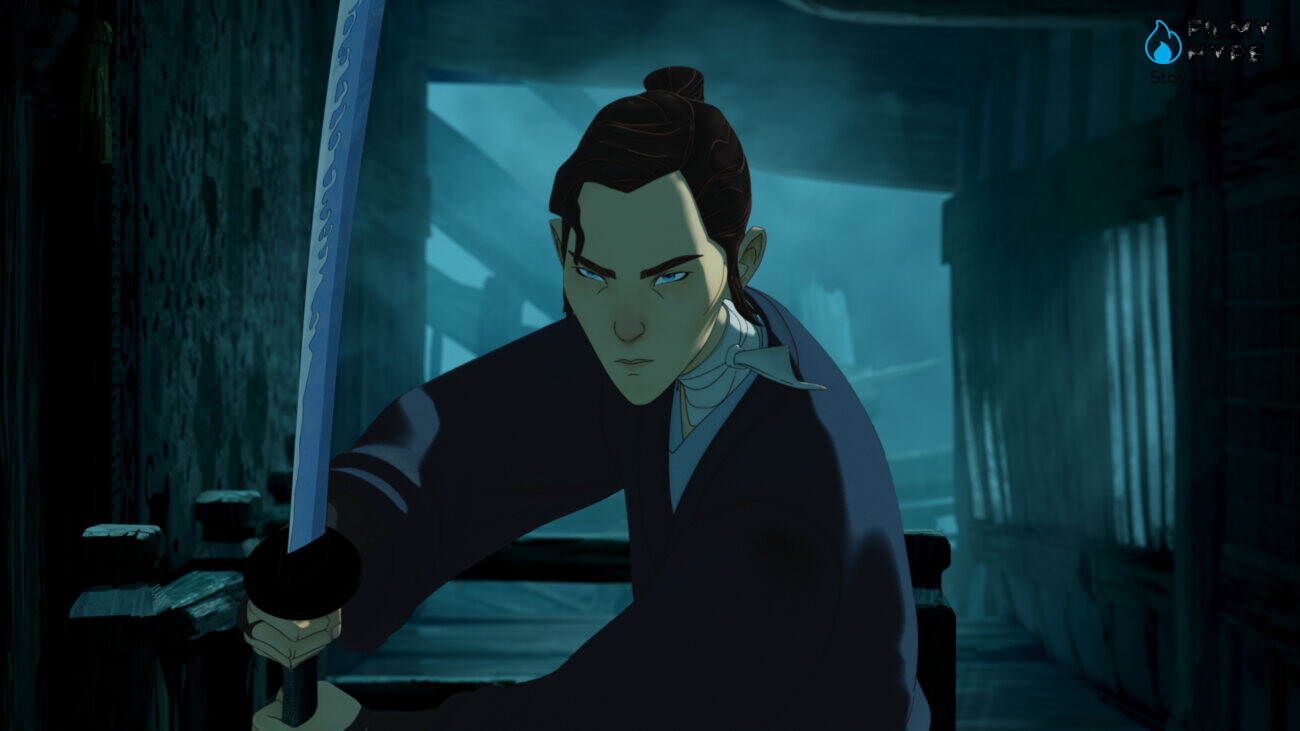
The Emmy Award–winning animated series from creators Amber Noizumi and Michael Green has become one of Netflix’s most acclaimed original productions. Its first season was a revelation—stunning animation, complex characters, and a protagonist who defied every expectation of what an action hero could be. Now the story is expanding, taking Mizu into unfamiliar territory and forcing her to confront the question that’s been hovering over her entire journey: are the people she’s hunting really the monsters she believes them to be?
Blue Eye Samurai Season 2: What Season 2 Is About?
The new episodes arrive in January 2027, and the teaser makes clear that the scope has expanded significantly. Mizu’s quest continues in London, where she’ll face “new friends, old foes, and her own demons.” That last phrase is doing a lot of work. Mizu has always been her own worst enemy—her rage, her isolation, her refusal to let anyone close. Season 2 seems poised to test those defenses in ways that Japan never could.
Meanwhile, back in Japan, the story continues without her. Akemi, voiced by Brenda Song, and Taigen, voiced by Darren Barnet, navigate Edo Castle under a dangerous new shogun. Ringo, voiced by Masi Oka, searches for a new purpose now that his teacher has left him behind. The parallel storylines suggest a season that’s as interested in the world Mizu left behind as in the one she’s entering.
There’s also an end in sight. Netflix has confirmed that Blue Eye Samurai will conclude with Season 3 in 2028. That’s a rare commitment for a streaming series—a clear, announced endpoint that promises the story will reach a definitive conclusion rather than stretching indefinitely. For a show built around a revenge quest, that’s essential. Revenge stories need endings. They need resolution. The fact that the creators have one in mind is a good sign.
The London Question
In interviews, Noizumi and Green have been explicit about what interests them in taking Mizu abroad. “It would be an interesting part of Mizu’s personal journey to see how Europeans react to her,” Noizumi said. “What would she think of Western culture when she’s suddenly immersed in it? Are they all the monsters she thinks they are?”
That last question is crucial. Mizu has spent her entire life as an outsider in Japan—her blue eyes marking her as different, as “impure,” as something to be feared and hated. The white men she’s hunting represent the source of that difference. They’re the reason she’s been treated as a monster her whole life. But now she’s arriving in their world, surrounded by people who look like them, and she’ll have to confront the possibility that her simple narrative—them as monsters, her as avenger—is more complicated than she thought.
The teaser suggests a season that will challenge Mizu’s assumptions. London in the 17th century is a very different world from Edo-period Japan. The rules are different. The dangers are different. And the people, whatever their sins, are still people. Mizu’s ability to see them as anything other than targets will be tested in ways she’s never experienced before.
The Creative Team
Noizumi and Green return as creators, writers, and executive producers. Jane Wu serves as supervising director and producer. The animation is once again handled by Blue Spirit, the studio that brought the first season to life with such stunning visual style. The commitment to authenticity that defined Season 1—the careful attention to period detail, the collaboration with historians and martial artists—continues.
“When we started this project, we made a commitment to take this very personal story set in Edo period Japan and bring it to life most authentically and beautifully possible,” Noizumi and Green said. “Our animators, historians, musicians, martial artists, and voice cast made this a reality beyond our expectations.”
That commitment now extends to London. Recreating 17th-century England with the same level of detail and authenticity is a significant challenge, but it’s one the creative team seems eager to embrace. The teaser shows glimpses of the city—crowded streets, towering buildings, a world that feels both alien and familiar.
The Cast
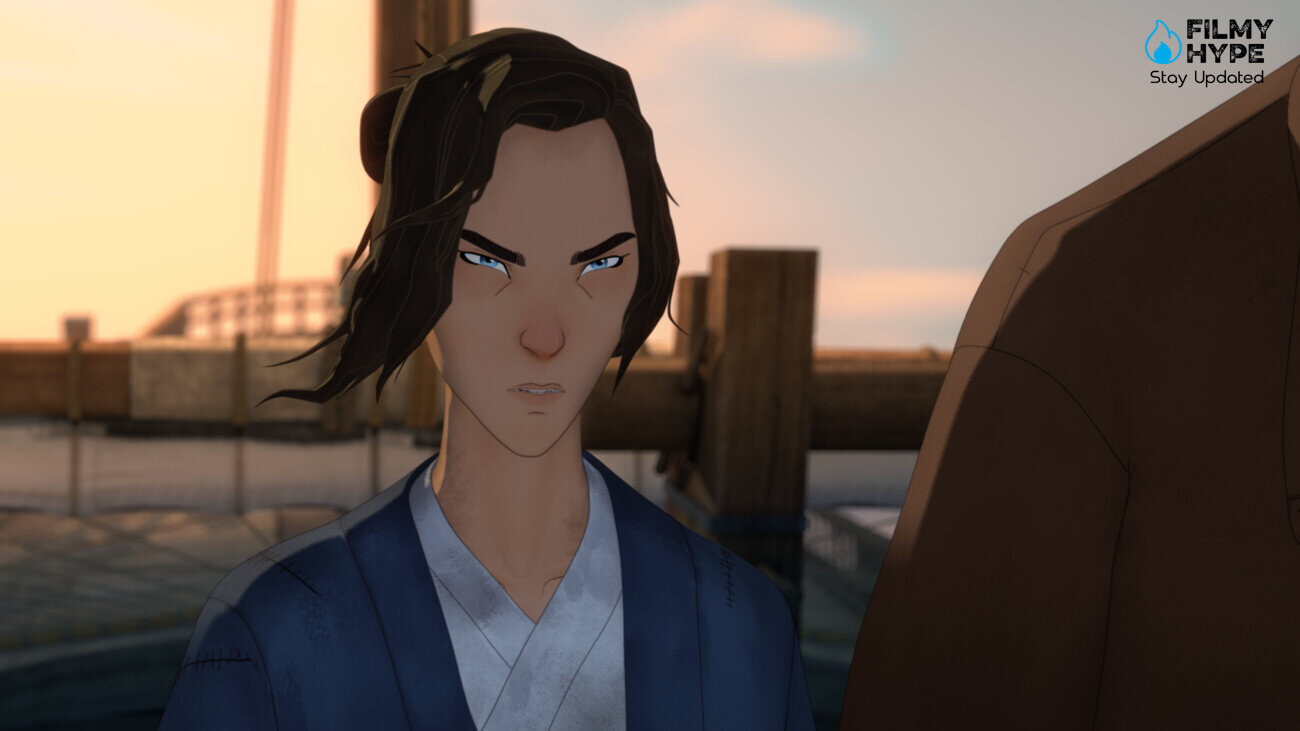
Maya Erskine returns as Mizu, and her performance remains one of the show’s greatest assets. She’s able to convey the character’s internal conflict with remarkable economy—the rage, the vulnerability, the terrible loneliness beneath the sword-swinging. Season 2 will presumably require even more range, as Mizu navigates a world where she can’t simply fight her way through every problem.
Brenda Song, Darren Barnet, and Masi Oka all return in their respective roles. The first season built a rich supporting cast around Mizu, and the decision to continue their stories rather than abandoning them for the London setting is smart. It keeps the show’s emotional grounding intact while expanding its scope.
The original cast also included Kenneth Branagh as Abijah Fowler, George Takei as Seki, Cary-Hiroyuki Tagawa as The Swordmaker, and Randall Park as Heiji Shindo. Whether any of these characters appear in Season 2 remains to be seen, but Fowler in particular seems relevant—he’s one of the men Mizu is hunting, and Branagh’s performance in Season 1 was a highlight.
What to Expect
Blue Eye Samurai has always been a show about more than revenge. It’s about identity, about the boxes society puts people in, about the violence that shapes us and the violence we choose to inflict in return. Season 2 seems poised to deepen those themes, using London as a mirror for Mizu’s own assumptions and prejudices.
The action will presumably be as brutal and beautiful as ever. The first season set a high bar for animated fight choreography—each battle telling a story, each movement revealing character. The London setting offers new opportunities for visual contrast, new environments for combat, new ways of staging violence that feel fresh rather than repetitive.
But the heart of the show has always been Mizu herself. Her journey is a lonely one, and Season 2 seems designed to test that loneliness. New friends, old foes, and her own demons. The demons are the interesting part. Mizu has spent her whole life running from herself. London might finally force her to stop.
The show has a planned ending now. Season 3 arrives in 2028, and the story will conclude. That’s a gift for audiences—a promise that this journey has a destination, that all the bloodshed is building toward something. What that something is remains unclear. But for now, the next chapter is almost here. January 2027. London is waiting. Mizu is coming. And the monsters had better be ready.