


One Hundred Years of Solitude Part 2 Ending Explained: There’s a moment in the final pages of Gabriel García Márquez’s One Hundred Years of Solitude when everything clicks into place. Not in the way of a mystery being solved—the novel has never been a whodunit—but in the way of a pattern becoming visible. The names that have been repeated for generations. The loves that keep curdling into the same disasters. The sense, building since the first page, that this family has been moving in a circle so tight it was always going to choke on itself. Aureliano Babilonia, the last of the Buendía line, stands in the ruins of the family home and reads the manuscript that contains his entire history. He reads about himself reading. He reads about the wind that’s about to destroy Macondo. And then the wind comes, and the city is erased, and the book ends.
Netflix has adapted Márquez’s novel across two parts. Part 2 arrived on August 5, 2026, with seven new episodes covering the second half of the book. The Grand Finale—a special episode directed by Laura Mora—is scheduled for August 26. What follows explains the plot of Part 2 and the ending of the novel, with the understanding that the series may adapt the conclusion with changes in pacing, emphasis, or specific imagery. The bones of the story, however, are unlikely to shift. They’re too precisely engineered.
One Hundred Years of Solitude Part 2 Ending Explained: The Plot of Part 2 and Macondo’s Transformation?
Part 2 opens in the aftermath of the war. Colonel Aureliano Buendía has signed the Treaty of Neerlandia. The fighting is over. But peace, in Márquez’s telling, doesn’t restore meaning. It just removes the distraction of violence. Aureliano returns to Macondo and withdraws into his workshop, where he makes tiny gold fish, melts them down, and starts again. The work is a meditation on futility, a material representation of the circular time that traps the entire family. He fought dozens of battles and lost them all, not because he was outmaneuvered but because the revolution he imagined was never possible. The war was just another repetition.
The focus shifts to the next generation. The twins Aureliano Segundo and José Arcadio Segundo rise to prominence, and their names—inherited from ancestors whose traits they seem to swap—introduce a confusion of identity that will persist through the rest of the story. Aureliano Segundo marries Fernanda del Carpio, a woman raised to believe she belongs to an aristocratic lineage that no longer exists. She brings to the Buendía house a rigid, religious order obsessed with appearances. She’s the antithesis of Úrsula, the family matriarch whose vitality has held the household together for decades. Fernanda doesn’t nurture. She polices.
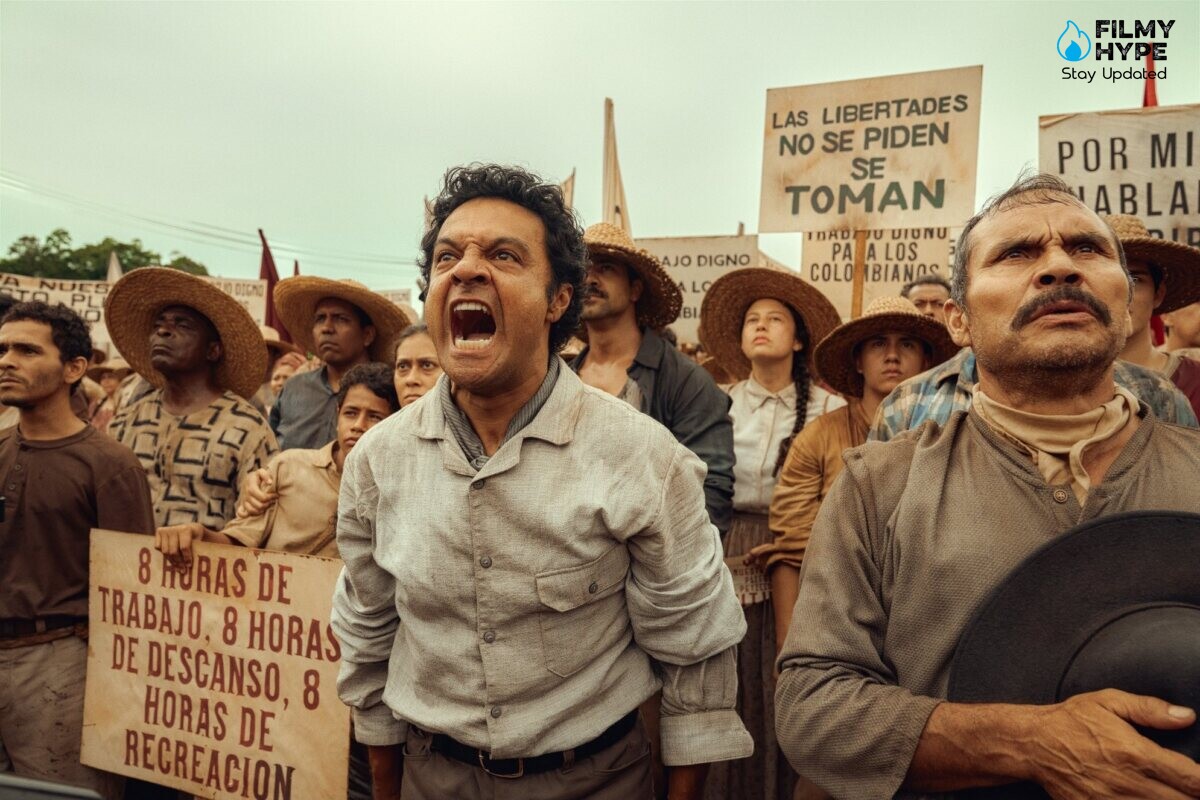
Meanwhile, the train arrives. For a moment, it’s a miracle. It connects Macondo to the outside world, bringing inventions, foreigners, trade, and the intoxicating sense that the isolated village has finally joined the modern age. But the train also brings the banana company. The company transforms the region, imposing an economic system that treats the land and its people as resources to be extracted. Workers face worsening conditions. Their demands are met with legal obstruction and bureaucratic evasion. José Arcadio Segundo, drawn to the labor movement, becomes a witness to what happens next.
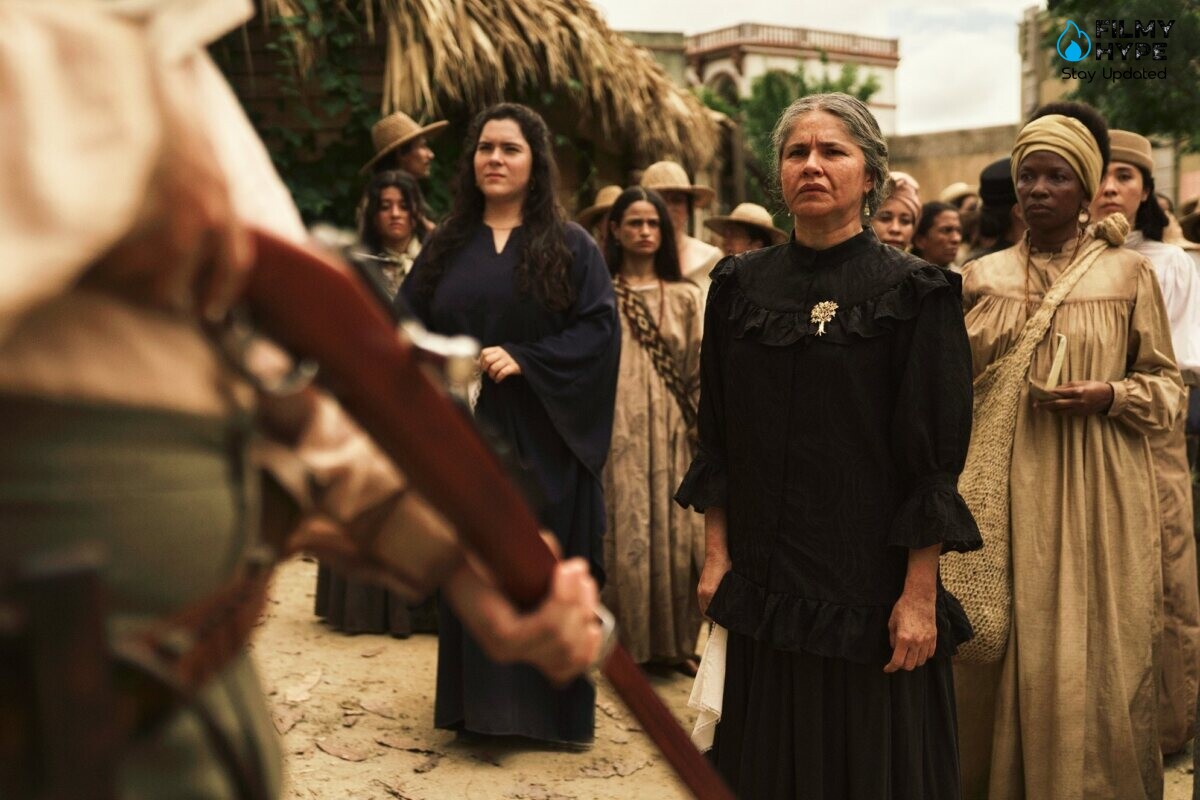
The army opens fire on a crowd of workers gathered at the station. José Arcadio Segundo survives and wakes on a train loaded with corpses. He returns to Macondo carrying the memory of over three thousand dead. But the authorities deny the massacre ever occurred. The official story, repeated until it replaces reality, is that nothing happened. The company never had any workers. The dead were never there.
Then the rain begins. It lasts four years, eleven months, and two days. The flood washes away the physical traces of violence and makes it easier for the official lie to take root. José Arcadio Segundo retreats to Melquíades’ room, where he guards the memory of the massacre alone. No one else wants to remember. The rain also accelerates the decay of the Buendía house. Úrsula, aging and going blind, can no longer hold things together. The rooms fill with debris. The family members die or disperse.
Meme, daughter of Fernanda and Aureliano Segundo, falls in love with Mauricio Babilonia, a mechanic always followed by yellow butterflies. Fernanda destroys the relationship. Mauricio is shot and paralyzed. Meme is sent away, silenced. Their son, Aureliano Babilonia, is passed off as a foundling and raised in the house without knowing his true parentage. The pattern of secrets and erasures that has defined the family from the beginning continues into its final generation.
How the Novel Ends?
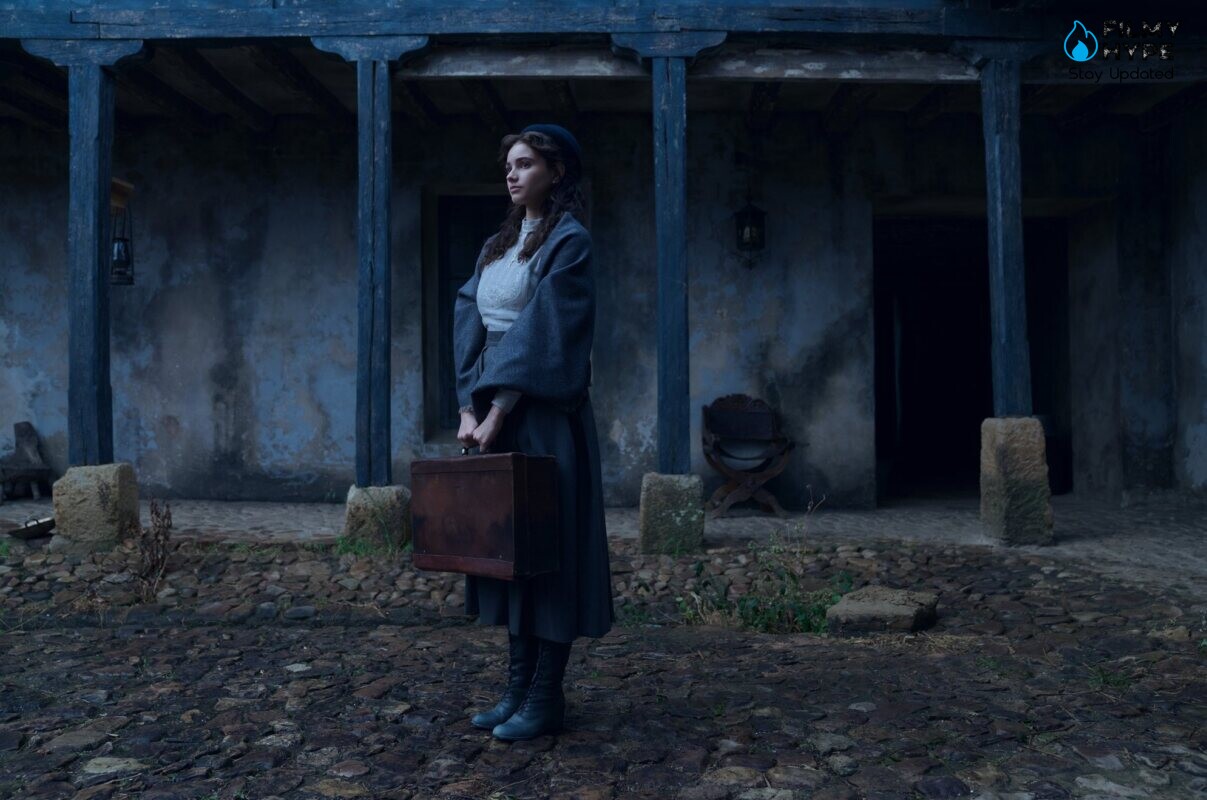
Amaranta Úrsula, Meme’s sister, returns to Macondo with her husband, Gastón. She’s energetic, determined to restore the crumbling house. But she and Aureliano Babilonia begin a love affair. Neither knows they’re related. She’s his aunt, though the family’s genealogical chaos has long since made such distinctions impossible to track. They’re happy in a way the Buendías rarely are, and their happiness is built on the same ignorance that has doomed every generation before them.
She gives birth to a child with a pig’s tail. The curse that Úrsula feared since the founding of the family—the result of incest, the punishment for defying the natural order—has finally manifested. Amaranta Úrsula dies from the hemorrhage of childbirth. Aureliano, mad with grief, leaves the newborn briefly. When he returns, ants are carrying the baby away.
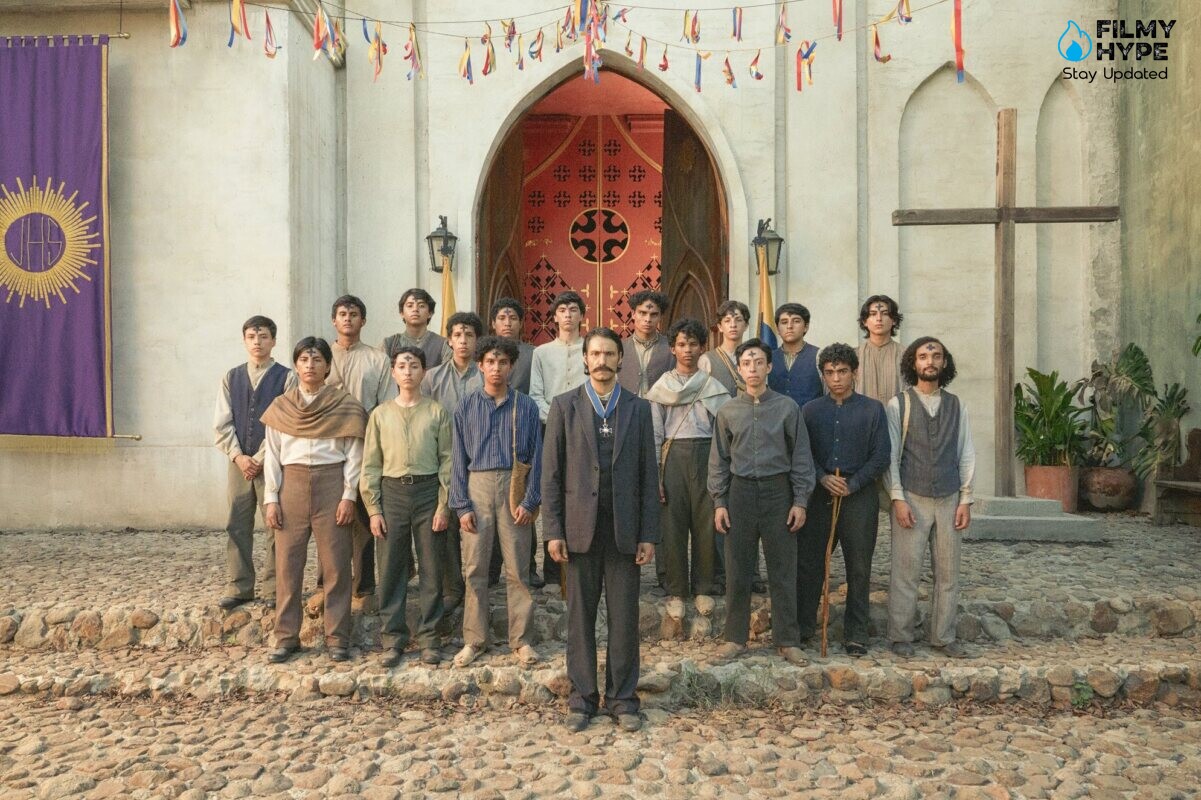
That image—the infant being consumed by ants—unlocks something in him. He remembers a line from Melquíades’ manuscripts, which he’s been trying to decipher for years. He finally understands how to read them. The manuscripts, it turns out, contain the entire history of the Buendía family, written in advance, down to the exact moment Aureliano is living. Every event in the novel has already been recorded. The circular time that the characters experienced as a curse was literal. Melquíades wrote the story a century before it happened.
Aureliano reads faster, trying to find his own fate. He learns that Amaranta Úrsula was his aunt. He learns that the child was the last of the line. He reads that Macondo will be destroyed by a biblical wind the moment he finishes deciphering the text. He keeps reading anyway, unable to stop, and as he reaches the final lines, the wind begins. The city is erased. The lineages condemned to a hundred years of solitude, the manuscript tells him, will not be granted a second chance on earth. The novel ends at the exact moment Aureliano reads about it ending.
How Does Colonel Aureliano Buendía Die?
The colonel’s death is quiet, which is not what anyone would have predicted for him. He spent more than twenty years fighting in the civil war between liberals and conservatives, a conflict he came to understand was incapable of changing the country’s destiny. He survived suicide attempts, assassination plots, and the kind of battlefield odds that should have killed him a dozen times over. But the war couldn’t give him a meaningful death any more than it could give him a meaningful victory. He returns to Macondo and withdraws into his workshop, where he makes tiny gold fish, melts them down, and starts again. The work is a meditation on futility, a material representation of the circular time that traps the entire family.
The final blows are not military. The arrival of American interests in Macondo, the transformation of the town into a company outpost, and—most cruelly—the murder of his seventeen illegitimate children, hunted down and killed one by one by unknown assailants, break whatever remained of his will. He dies naturally in his own home, an old man remembering the early years of his childhood, before the wars and the politics and the long, grinding disappointment of adult life. His death closes the cycle of the character who, for decades, symbolized the Buendía resistance. The resistance didn’t fail because it was defeated. It failed because the world it was trying to change didn’t want to be changed.
What Do the Brothers Aureliano Segundo and José Arcadio Segundo Represent?
Arcadio’s twin sons inherit the family’s divided nature and push it in opposite directions. José Arcadio Segundo becomes the driver of Macondo’s progress. He brings electricity to the town. He participates in the arrival of the railroad. And when the United Fruit Company establishes its operation and begins exploiting workers, he becomes the family’s political conscience—organizing, agitating, and ultimately witnessing the massacre that the official record will deny ever happened.
Aureliano Segundo takes a different path. He focuses on family and prosperity. His relationship with Petra Cotes brings almost miraculous wealth—the livestock reproduce at an unnatural rate, as if abundance itself is a form of magic—while his marriage to Fernanda del Carpio marks the beginning of a new, more rigid chapter in the Buendía household. Fernanda brings religion, propriety, and a relentless concern with appearances. She’s the opposite of Úrsula, whose vitality sustained the family through decades of chaos. Where Úrsula adapted, Fernanda imposes.
The twins represent two responses to the modern world crashing into Macondo. One tries to resist it politically. The other tries to profit from it. Both fail in ways that are characteristically Buendían—not because they’re outmaneuvered, but because the forces they’re dealing with don’t play by rules that human will can overcome.
What Happens with Remedios la Bella and Amaranta?
Remedios la Bella, the most beautiful woman in Macondo, doesn’t die so much as depart. Her ascension to heaven—literally rising into the sky while folding sheets—is one of the novel’s most famous images, and the series treats it with the matter-of-fact wonder it deserves. Remedios is too pure for this world, too disconnected from earthly desires, and her disappearance is a supernatural event that the characters accept with the same strange calm with which they’ve accepted everything else. In Márquez’s world, miracles don’t announce themselves. They just happen, and people adjust.
Amaranta’s death is the opposite: entirely anticipated, entirely on her own terms. She announces the exact day of her death with complete naturalness. She even agrees to carry messages from the living to their deceased relatives, a kind of postal service to the afterlife. Then she dies peacefully, closing a life marked by the renunciation of love. Amaranta spent decades refusing the affections of the men who loved her—not because she didn’t feel anything, but because she was trapped in a pattern of rejection she couldn’t escape. Her death is calm, controlled, and entirely characteristic: even in dying, she does things her own way.
Why Does Meme Leave Macondo?
Meme’s story is one of the season’s most brutal arcs, and it illustrates exactly what kind of force Fernanda del Carpio has become in the household. Meme falls in love with Mauricio Babilonia, a mechanic always followed by yellow butterflies. The relationship is secret, passionate, and doomed. When Fernanda discovers it, she doesn’t just end it. She arranges for Mauricio to be shot.
He survives but is paralyzed for life. Meme, devastated, stops speaking entirely. Her silence is total, irreversible—a young woman who has been so thoroughly broken by what was done to the person she loved that language itself becomes impossible. Fernanda sends her to a convent, far from Macondo, far from any possibility of seeing Mauricio again. What Fernanda doesn’t know—or perhaps chooses not to acknowledge—is that Meme is pregnant. She gives birth to a son, Aureliano Babilonia, who is passed off as a foundling and raised in the Buendía house without knowing his true parentage. He will become one of the most important figures in the story’s conclusion, the last reader of Melquíades’ manuscripts, the one who finally understands what the family has been doing to itself for a hundred years.
What Happens to the United Fruit Company?
The banana company transforms Macondo. What initially seems like progress—jobs, infrastructure, connection to the wider world—reveals itself as a system of exploitation. Workers face brutal conditions. Their demands are met with legal obstruction and bureaucratic evasion. José Arcadio Segundo, who has become the family’s political conscience, supports the workers and helps organize a strike.
When thousands of workers gather at the station to negotiate, the army opens fire. The massacre kills approximately three thousand people. It is one of the novel’s most famous and devastating passages, and the series renders it with appropriate horror. José Arcadio Segundo survives and wakes on a train loaded with corpses. He returns to Macondo carrying the memory of what happened.
But the authorities deny the massacre ever occurred. The official story, repeated until it replaces reality, is that nothing happened. The company never had any workers. The dead were never there. Then the rain begins—a deluge that lasts four years, eleven months, and two days. The rain is both a narrative event and a symbolic one: it washes away the physical traces of violence and makes it easier for the lie to take root. The United Fruit Company leaves, its work done. Macondo is left ruined, flooded, and amnesiac.
Who Is Still Alive at the End of Part 2?
By the time the seven episodes conclude, the Buendía family has been dramatically reduced. Úrsula dies after reaching an extraordinary age—she’s been the family’s anchor for so long that her absence creates a vacuum nothing else can fill. Aureliano Segundo and José Arcadio Segundo die practically simultaneously, closing another generation with the symmetry that has defined the family’s history.
Fernanda now exerts complete control over the crumbling household. She keeps hidden the infant Aureliano Babilonia, Meme’s son, whose existence is a secret even from most of the remaining family members. José Arcadio, Meme’s brother, is in Rome studying to become Pope—a Buendía ambition that is both absurd and entirely in character. Amaranta Úrsula, the last daughter, is in a convent in Belgium. Meme remains confined far from Macondo, silenced and separated from her son, who is growing up in the house without knowing who his parents are.
What the Ending Means?
The Buendías are trapped in repetition because they can’t recognize the patterns. The names recur—Aurelianos tend toward isolation and lucidity, José Arcadios toward impulse and desire—but each generation believes it’s living something new. The prophecy in Melquíades’ manuscripts isn’t magic imposing a fate. It’s a record of what happens when people refuse to learn from what came before them. Úrsula intuits the circular structure better than anyone. She spends decades trying to prevent the birth of the pig-tailed child, but her descendants forget their kinship and repeat the original sin anyway.
Solitude, in Márquez’s telling, isn’t about physical isolation. The Buendías marry, have children, and share homes. They just can’t communicate what matters. The colonel retreats to his workshop. Fernanda hides behind lies and appearances. Meme stops speaking entirely. José Arcadio Segundo guards the memory of the massacre alone. The love between Aureliano and Amaranta Úrsula seems genuine, but it’s built on ignorance of their connection. Their happiness doesn’t break the cycle. It fulfills it.
The massacre of the banana workers is the novel’s most explicitly political passage, and its erasure is a lesson in how power controls memory. The rain washes away evidence. The official story replaces the truth. The community accepts the lie because accepting it is easier than confronting what was done. José Arcadio Segundo, alone with the memory, becomes a figure of resistance that no one else recognizes. The manuscripts serve the same function: they preserve a truth the world has rejected. The tragedy is that Aureliano understands them only when there’s no time left to act on what he’s learned.
The metafictional twist—that the book we’re reading is the same text Aureliano is reading—closes the loop. Macondo exists as long as its story is being read. The moment the story ends, the city is destroyed. But the reader, unlike Aureliano, survives. We finish the novel and carry Macondo with us. The wind doesn’t come for our world. The warning—that those who repeat the past without understanding it exhaust all possibilities for change—is left for us to heed or ignore.
What to Expect From the Finale
The Grand Finale arrives August 26, directed by Laura Mora. The series has been remarkably faithful to Márquez’s novel, produced with the support of his family, and there’s little reason to think it will deviate from the essential beats of the ending. The pig-tailed child. The ants. The manuscripts. The wind. What remains to be seen is how the adaptation handles the revelation—how it translates Aureliano’s sudden comprehension of the text into images, how it stages the erasure of Macondo, whether it preserves the novel’s audacity of ending at the exact moment the world it describes ceases to exist.
The first seven episodes of Part 2 have already set the stage. The rain has fallen. The massacre has been denied. The house is crumbling. The Buendías are down to their last few members, and they’re about to make the same mistakes their ancestors made, for the last time. The ending, when it comes, will be both surprising and inevitable—the way prophecies always are when you finally understand what they were saying all along. Macondo has been dying since it was founded. It just took a hundred years for death to arrive. And when it does, it’ll take exactly as long as it takes Aureliano Babilonia to turn the final page.