28 Years Later Movie Review: Cult Saga Between Infected and Struggle for Survival!
With 28 Years Later, Danny Boyle signs the third act of a saga that not only terrifies, but it reflects without filters on what we have become as individuals and as society. More than twenty years after 28 Days Later, Boyle resumes the universe of the infected to transform it into a parable on isolation, political fractures, and collective fears that rot beneath the surface of a nation. Britain, more than a post-apocalyptic scenario, is a microcosm of what happens when a community decides to close itself off to the world, even at the cost of being consumed from within. When 28 Days Later went out to the cinema in 2002, and immediately became a small cult. Filmed on a fairly small budget of about $ 8 million, completely digitally, it reinvigorated the genre of zombie movies, even if technically they are infected and not dead, presenting fast, agile, and deadly creatures. To see him again today, he has aged perhaps less well than we remember, but the combination of Danny Boyle in directing and Alex Garland in script marked a blow destined to remain in the history of cinema.
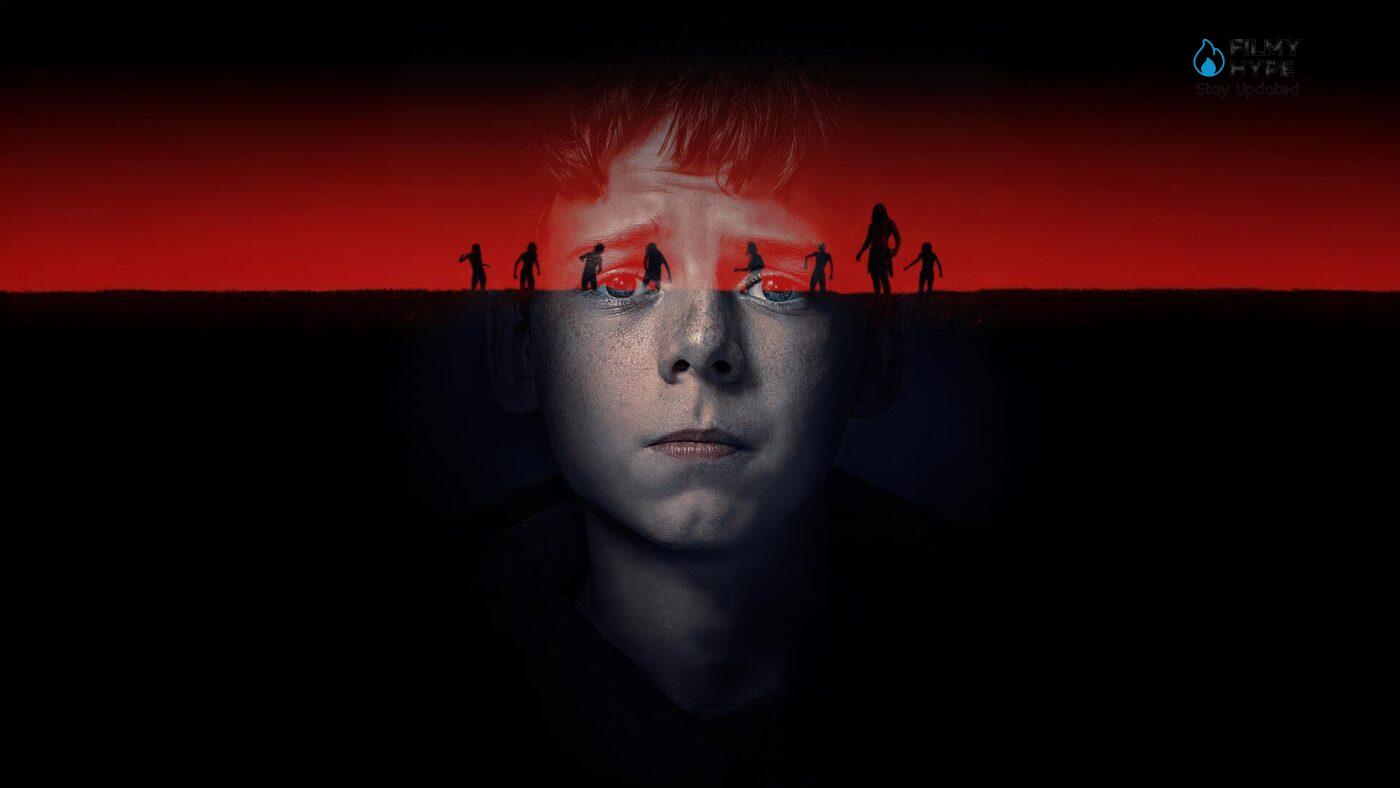
It is not surprising, then, to find them both in 2025 with 28 Years Later, the third chapter of the saga to be released on June 18 with Eagle Pictures, almost two decades after the sequel, 28 Weeks Later, in 2007, on that occasion contracted to Juan Carlos Fresnadillo. The cinema always fades where it cashed, so why not go back to that cornerstone of the beginning of the millennium to settle in the rooms with a genre that had been missing for a while, with strong proposals. A film that not only revived the zombie genre, but it definitely contaminated it, making viral anger a perfect metaphor for our time. Twenty-three years later, the triad is recomposed (almost): Boyle returns to the direction, Garland to the script, and Murphy, although not present on the screen, appears as executive producer. 28 Years Later, it is not only the third piece of a saga (in 2007 it came out 27 weeks later, with Boyle and Garland as executive producers), but the first chapter of a new trilogy. A film that reflects on the cinematographic and social past, and wonders: what remains of the human after the apocalypse?
28 Years Later Movie Review: The Story Plot
We meet again in England, 28 Years Later, the outbreak of an epidemic that has infected Britain with a disease that transforms people into violent and cannibalistic beings. The rest of the world, however, escaped (despite some narrative inconsistencies with the previous chapters), opting to quarantine the islands and leaving the survivors to their fate. It would be a textbook script, which now resonates in a rather clear way of a recent history crossed by the absurd reality of Covid-19, and even before politically by Brexit. Garland, on the other hand, is one of the contemporary authors who lets himself be permeated by the electrical tensions of the surrounding world – his is the film Civil War, to give an example. So the island that houses the protected community where Jamie (Aaron Taylor-Johnson), Isla (Jodie Comer), and their son Spike (Alfie Williams) live reverses the meanings of protection over protectionism and protection over isolationism.
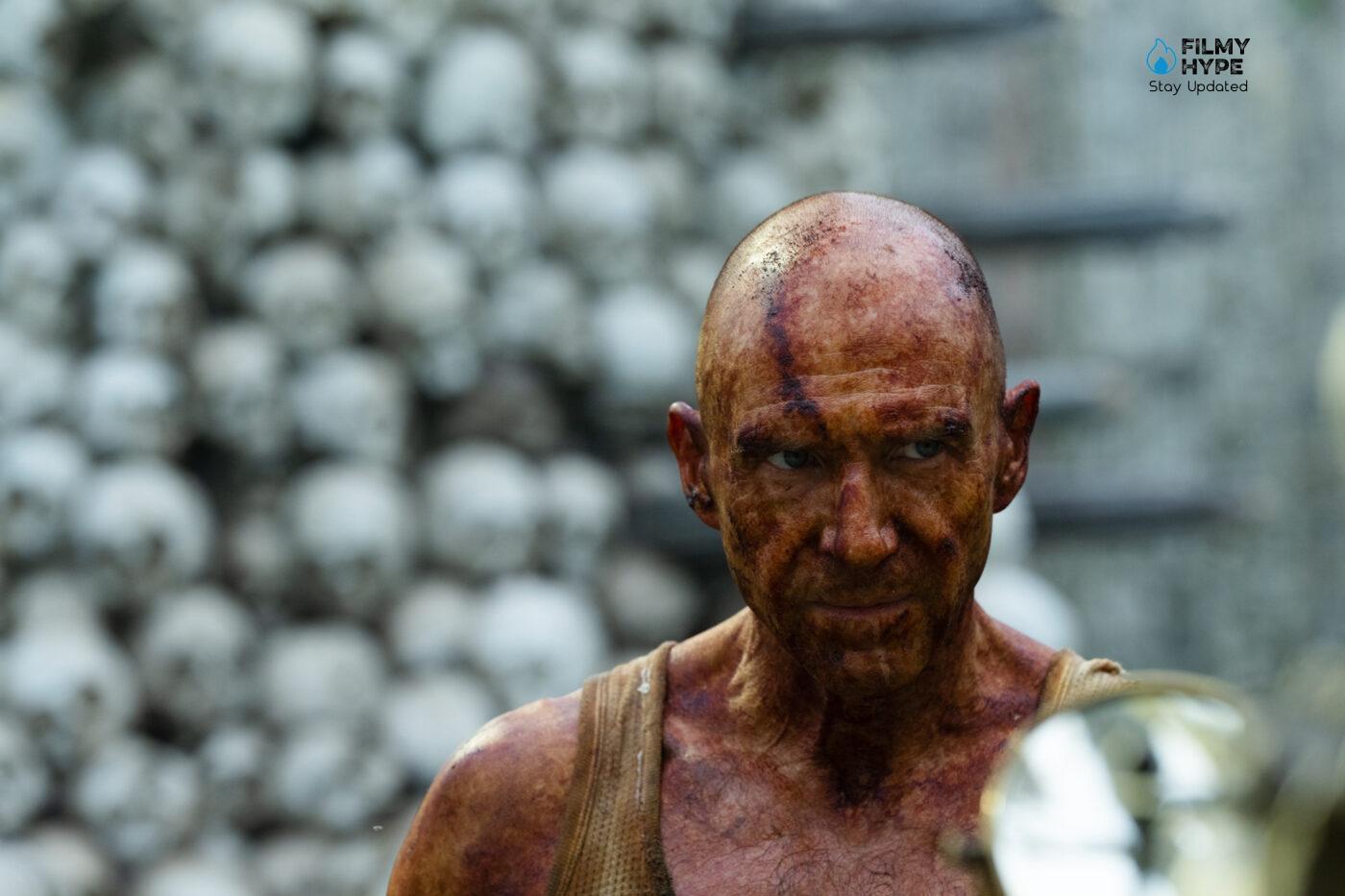
After all, on the mainland there are “strange people”, warns Jamie, manhood of the past, when he brings Spike for the first time to that rotting world outside the walls. Among infected swollen and hostile figures who nest in the shadows, however, there is also the light of science: the wacky Dr. Kelson (Ralph Fiennes), from whom everyone keeps away but from whom Spike is unable to secretly bring the mother, sick of something that nobody knows what it is because of doctors, on the island, there are none. 28 Years Later builds its narrative force on the parallelism between two worlds: that of humans and that of the infected. No more simple monsters, the “Alpha” has evolved: stronger, more organized, less impulsive. They have become “companies”. And in showing this change, Danny Boyle also tells ours: an isolated United Kingdom, reduced to a contaminated area, returned to a form of socio-cultural Middle Ages. Brexit, pandemic, social anger: everything converges.
The father who protects by lying, the son who disobeys for love, the sick mother who becomes a symbol of a world that can no longer be healed. In this emotional map, traces of The Last of Us, of Contagion, but also of the first The Walking Dead. Except that here the enemy is not only outside, but he is also inside: it is the fear of changing, of relying on the other, of opening up to the different. The zombie apocalypse is the consequence of the spread of a virus, the virus of Anger. There are two news, one good and one bad. The good news is that the rest of the world, Europe in particular, has managed to eradicate it. The bad news is that the same cannot be said of the United Kingdom. To seal the island and prevent a resurgence of Anger (capitalization is a must), European governments have imposed permanent quarantine on British territory. The few survivors have to do it alone by rebuilding, as far as possible, the world before. The reconstructed world is not too recent English past, say mid-twentieth century or so, adapted for the occasion.
Unlike the first two films 28 Years Later has the advantage of building his imagination by drawing fully on the repertoire of our more or less recent current affairs, both the pandemic bubble of 2020 and following, and the success of a reactionary way of thinking about the world and politics deflagrated with the cyclone Brexit in 2016. The island, separated by a narrow strip of land in which the protagonists live, is a very traditional society, let it be said to be retrograde. Men like Jamie (Aaron Taylor-Johnson) hunt; women, like his wife Isla (Jodie Comer), provide for the rest. Isla is sick and has something neurodegenerative that explodes in her head, with great pain from her son Spike (Alfie Williams). Jamie takes Spike on patrol in the mainland woods to kill zombies. It is a sort of rite of passage; in those parts, you become men by killing. Spike does so well that he decides, unbeknownst to everyone, to go out again, take his mother with him, and reach the mysterious Dr. Kelson on the mainland (Ralph Fiennes), who perhaps has a cure for Isla. Kilometers of wild and unexplored lands, populated by hungry infected, separate the island from the Kelson shelter. What can go wrong?
28 Years Later Movie Review and Analysis
From a technical point of view, 28 Years Later is a remarkable film. The photograph of Rob Hardy gives iconic sequences while choosing to Danny Boyle to alternate dirty digital and medieval repertoire images returns the idea of a regressed civilization. The sets do the rest: decadent interiors, rural fortresses, infected woods. The intimacy of writing, Alex Garland marries the epic and visceral tone of the direction. The real heart of the film, however, is the father-son relationship, closed, asphyxiated, a mirror of the isolation of the entire United Kingdom. It is in this dynamic that 28 Years Later finds its most authentic voice, in that need to go out, to breathe, to look elsewhere. Excellent interpretations: Ralph Fiennes, as always superb, manages to give credibility to a character who at the same time is a doctor, scientist, and prophet; Aaron Taylor-Johnson convinces as a tormented and ambiguous father, as well as Jodie Comer, a sore but always proud mother. And then there is Alfie Williams, the true revelation, capable of keeping together fragility and courage and stealing the scene from distinctive figures for the big screen.
Yet, 28 Years Later always seems to want something more: a more iconic scene, a more incisive turning point. Maybe because, after all, it’s just the beginning. A zero episode, a prologue. The film builds a world, sows tracks, and prepares the ground. But sometimes it seems to forget that it is, first of all, a film. Ultimately, 28 Years Later is a courageous, dense, and visually powerful work, which lacks something that perhaps has yet to arrive. It does not have the innovative urgency of the first chapter, but it carves out an original space between political allegory, family drama, and evolved horror. Boyle and Garland sign a story that talks about our present looking to an infected, but still deeply human, future. A very full sufficiency, waiting for the next infection. 28 Years Later, it is therefore articulated on a canvas whose guiding idea is to continually turn the map of interpretations. Salvation perhaps does not come in the way you are used to waiting for it and perhaps a progeny arises from the monster that undermines the shaky moral certainties – here the film discusses reproduction between infected and infected “alpha”, intuition that recalls that of an overall film not too successful as the Army of the Dead by Zack Snyder, whose most interesting starting point was precisely in the idea of a new “bestial” society.
Boyle, however, does not forget entertainment and makes 28 Years Later a visually daring work. Anthony Don Mantle’s photography shuns the typical grayness of post-apocalyptic tales and expands on the retina through never-before-seen direction solutions. It is striking how this is a very sunny film, which in the dark occurs little (when it seems to quote a small classic, The Darkness Approaches, Kathryn Bigelow) and always in the creation of a contrast that responds first to the desires of the gaze and the impulse of fear. The English director is not quiet and does not give up on the punk soul who has gone through all his filmography in alternate currents since the time of Trainspotting. Experiment and play with very agile intuitions – many iPhone 15s and drones have been used for filming, finally used for something more than stinging bird flights – and accorded to that humor between the underground and the foolish volunteer whose 2002 film was already permeated.
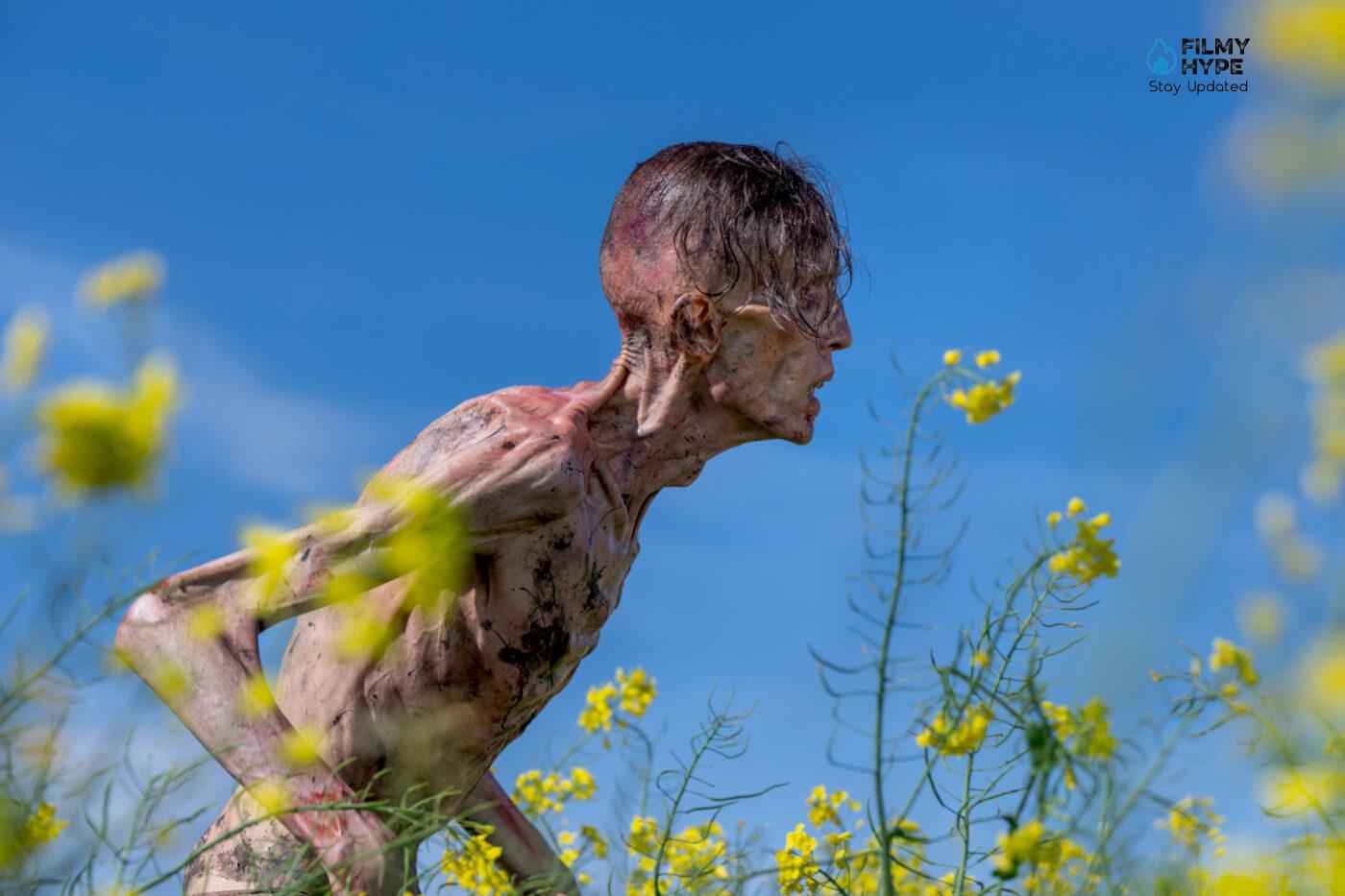
There is fun to be had by a work that fishes from what is around and reconfigures it in simple but functional metaphors. Making the journey into the heart of darkness a training journey (it is a coming of age, in its way), even if less arthouse than 28 Days Later and with the commercial relaunch of the franchise in mind: it is the first appointment of a new trilogy written by Garland and of which the second film, directed by Nia DaCosta, was already shot immediately after this. If the first film had revolutionized the zombie movie, making the infected agile and angry, 28 Years Later, he made a further evolutionary leap: the “slow-lows” crawl like death larvae, the Alpha dominate the food chain with superhuman force. Boyle embroidered this bestiary with a direction that alternates convulsive montages with wide and contemplative images, merging decaying body and luxuriant nature into a single breath of putrefaction and rebirth. Horror is no longer just external monstrosity, but biological and social metamorphosis, a living metaphor for a humanity that changes its skin without changing its soul.
But to make 28 Years Later an opera rather than a horror, Isla, played by a magnetic and touching Jodie Comer. Isla is a mother, sick, fragile. Yet it is also the true generating force of the entire story. His moments of lucidity and his feverish delusions become a second lens through which Boyle forces us to look at the world: a landscape of distorted memories, of affection that resists disease, of humanity that refuses to die. Isla represents what remains authentically human: a motherhood which, although marked by the virus, refuses to become corrupt. His condition is not just a dramatic subplot: it is the deepest interpretation of the film. In the face of Isla — and the moving interpretation of Comer, here really in a state of grace — there is the biggest question: what survives in a world where survival has become a routine of violence?
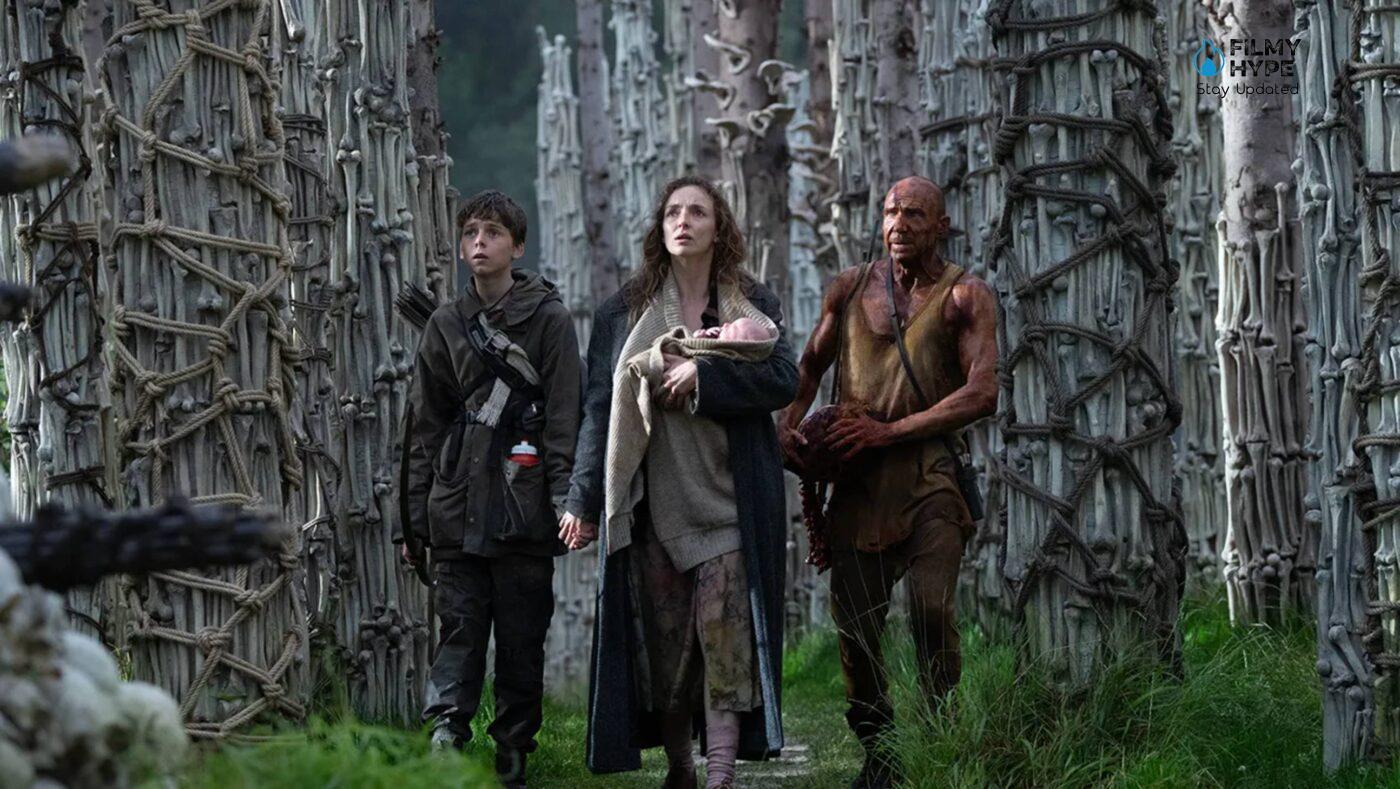
Next to Isla, Spike becomes the emotional fulcrum. It is a training course that starts as an initiation into combat but turns, in silence, into a lesson of love and fragility. The bond with the mother, the discovery of the limits of the father, and the encounter with the enigmatic Dr. Kelson (a charismatic and disturbing Ralph Fiennes) push Spike to wonder what it means to be “adult” in a world where violence is law. Boyle orchestrates all this without rhetoric, letting the blood, whispers, and wooden crosses narrate a black fairy tale that feeds on Christian roots but speaks a punk language. One of the most powerful layers of 28 Years Later is its political reading: the fortified island is not only protection against the infected, but a crystalline symbol of post-Brexit Britain. Boyle uses physical quarantine as a metaphor for a country that has chosen to cut bridges with the outside world, closing in on an illusion of purity and control. The bridge that closes with the tide becomes the perfect image of mobile borders and an obsession with security that ends up devouring the community from within.
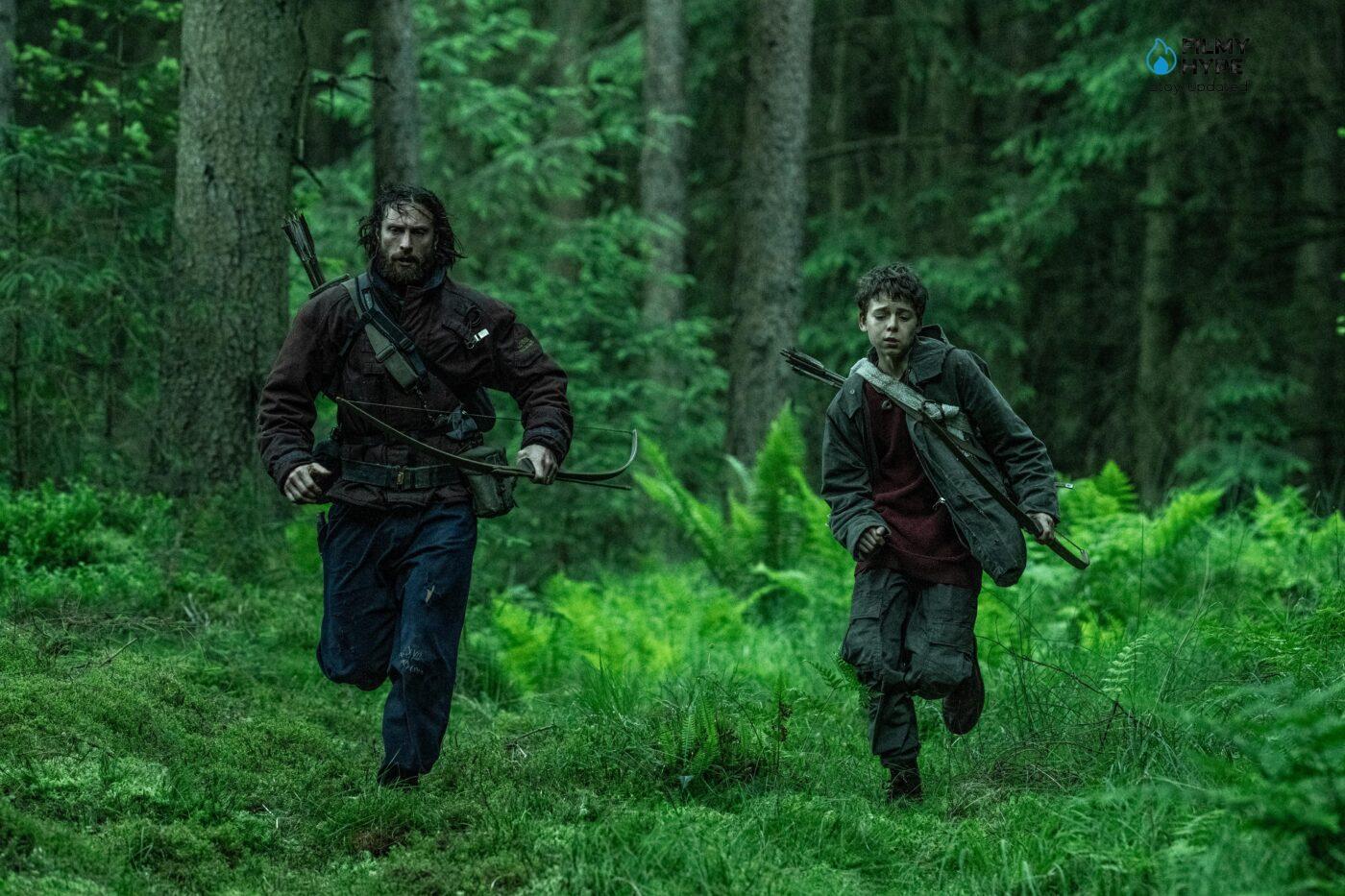
Not surprisingly, the infected are less monstrous than the survivors: the more the virus is kept out, the more fear contaminates the soul of those who remain. It is Brexit’s nightmare elevated to horror tragedy: the island as a self-imposed prison. Those who love Boyle will find all his stylistic signatures: nervous assembly, hand chamber, digital ginning, drones, and iPhones used not for fashion but to return a dirty, tangible reality. The action sequences are schizophrenic and hypnotic, while the moments of pause, often dominated by deserted panoramas and ruins inhabited by crosses and human remains, create an almost mystical contrast. The soundtrack, at times industrial, at times orchestral, communicates with the images like an out-of-phase heartbeat: restless, alive, deeply human. 28 Years Later, it is not the usual zombie movie: it is a requiem for a humanity that seeks redemption in the rubble of its pride. Boyle signs an adult horror, imperfect but vibrant with ideas, where true fear is not mutant creatures but what we remain after losing everything. And in the beating heart of the film — Isla, mother and prophet, fragile and invincible — hides the only truth that matters as long as some love, the apocalypse will also have to surrender.
28 Years Later Movie Review: The Last Words
28 Years Later is a fully successful film, a sequel that takes up the ranks of the 2002 feature film and then expands the discussion by proposing a complex script, full of themes, from the most philosophical to the themes of strict relevance. The characters work and escape many of the clichés of post-apocalyptic horror, helping to play with the genre in order to displace and involve the viewer without ever repeating themselves. Even the direction becomes more inspired while maintaining that stylistic code that distinguishes Danny Boyle and that his fans like. 28 Years Later, he renewed the saga of the infected by weaving it with a political and intimate reflection. A layered horror where Brexit is a prison and Isla is redemption. Unmissable.
Cast: Aaron Taylor-Johnson, Jodie Comer, Ralph Fiennes, Alfie Williams
Directed: Danny Boyle
Filmyhype.com Ratings: 4.5/5 (four and a half stars)