28 Years Later Ending Explained: What Happened to Isla and Who Finds Spike in the Last Scene?
After many years of waiting, 28 Years Later, it’s already in theaters. The new delivery of the saga of Danny Boyle comes with innovative filming techniques, like iPhone use, and with an unprecedented and independent history. Set in the same world, this time the plot takes us to the north of Scotland. There, a community has managed to survive isolated from the virus for almost three decades. And in it lives the little one Spike, the great protagonist of the tape. In the final third of 28 Years Later, Spike finally finds Dr. Ian Kelson, who in his town had explained to him that he is a crazy and dangerous man. But in the face of his mother’s illness, the child as young as 12 has no choice but to go looking for him. And when they finally find him, what they discover is that he is a tremendously affable and close person. 28 Years Later, it’s not just a sequel: as we explained to you in our review, it is an evolutionary reflection on how a society collapses and rebuilds itself, even when the rabies virus now seems chronic and confined. Unlike what was suggested by 28 Weeks Later, there was no global invasion: the virus remained confined to the British Isles, while the rest of the world continued its life, guarding the quarantine from the outside.
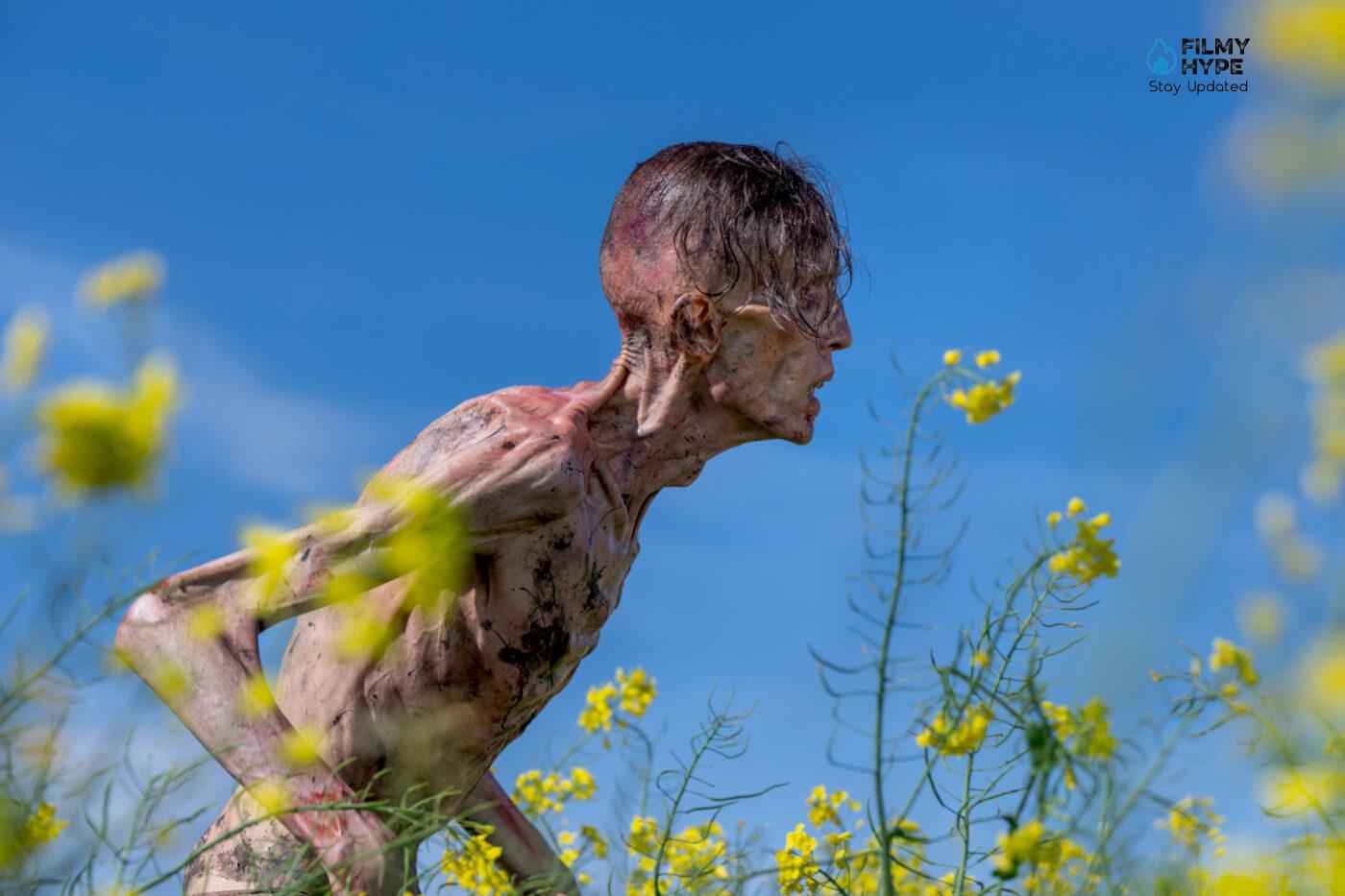
The survivors in Great Britain, however, have learned to fear not only the infected “classics” but also the so-called Alphas: a variant well known and feared for its strength and superior intelligence. It is worth specifying that production develops throughout 115 minutes of footage, a time when you star like Jodie, Aaron Taylor-Johnson, and Jack O’Connell present the continuation of “28 Days Later”. Turns out, almost three decades later, that the rabies virus escaped from a biological weapons laboratory, survivors have found a way to exist among those infected, now subjected to a ruthless quarantine. Thus, one of these groups lives on a small island connected to the mainland by a single heavily defended bridge. So when a group member leaves the island on a mission to the dark heart of the continent, he discovers the secrets, the wonders, and the horrors that have transformed not only the infected, but also other survivors.
28 Years Later: The Story Plot
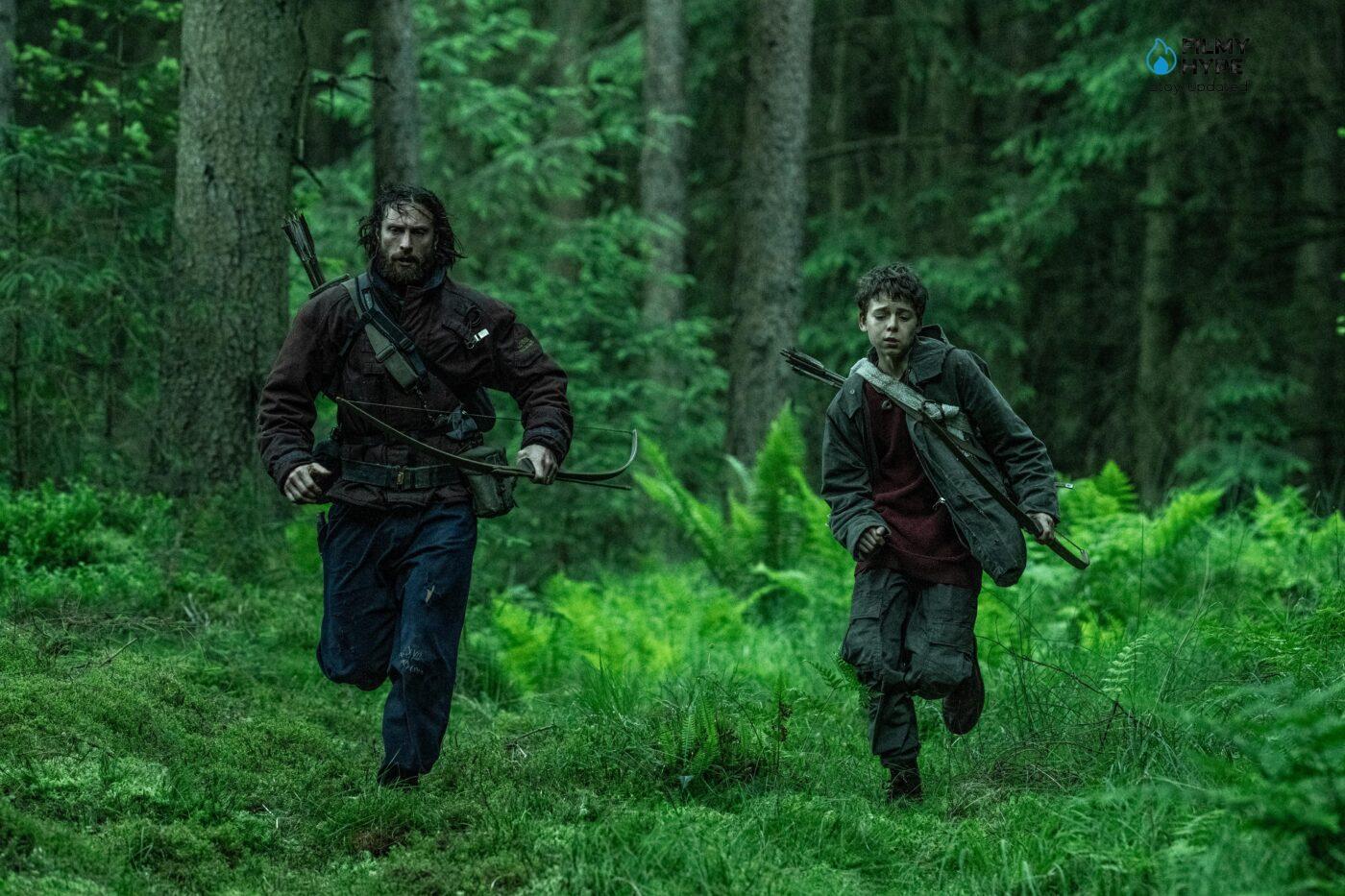
The film does not follow the story of Jim or the protagonists of 28 Weeks Later, but focuses on the story of a 12-year-old boy named Spike (Alfie Williams), who lives with his family (Jamie and Isla, played by Aaron Taylor-Johnson and Jodie Eat) on a small island, which has managed to stay safe because it is heavily protected and has only one connection point to the mainland (where the infected are), and is not exactly accessible. The mother of Spike is ill, and to teach her how to survive, her father decides to take him to the mainland, where his goal is to teach the infected to hunt. In the process, Spike is forced to grow and face a new type of infected, who are bigger, stronger, and much more difficult to destroy (the so-called Alphas), but he also faces death and the reality that his mother’s illness is much more serious than he imagined. 28 Years Later combines the chaos, brutality and violence of the “zombies” (although, technically, the infected are not zombies, because they are not dead) with the family drama and with a series of stories that are connected, and that are They will continue to explore in the next movie, titled 28 Years Later: The Bone Temple. The end of 28 Years Later is not just an ending, but leaves the “table set” for the next movie in the saga.
28 Years Later Ending Explained: What Happened to Isla and Who Finds Spike in the Last Scene?
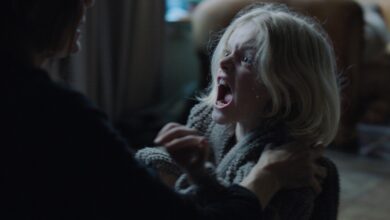
After losing his mother and learning a valuable lesson about life and death, Spike gets back on the way home. But not to meet his father again, precisely. With a note read aloud, the end of 28 Years Later details the true motivation of Spike. The protagonist of the film explains his journey and how he is not ready to enter the town again. What he has lived has completely changed him and made him grow. Now, he wants to survive on his own, showing himself that he can, in the dangerous territory of the infected. But you can’t do it with the baby. So he leaves her in a basket at the door and asks them to take care of her. Also, baptizes it as Island, in honor of his deceased mother, who demonstrated the greatest closeness and courage that has ever been seen with those infected.
After the decision of Spike hides the true explanation of the end of 28 Years Later. The film tells us that we are all mortal, and it is good to remember and keep it in mind. Death must be accepted. It is the “memento mori”, the Latin expression that reminds us of the tape and that is its backbone on a philosophical level. But just as important is remembering that we must live. Danny Boyle has explained on several occasions that the film is highly influenced by the post-COVID era. Millions of people lost loved ones during the pandemic. But in the end, we all must learn to move forward in this world, however hard and egregious it may be at times.
Who is Jimmy?
But the decision of Spike is accompanied by an extra scene. The boy is preparing a fish at a stake when a group of infected find him. Aware that he must run to get to safety while shooting them, the protagonist of 28 Years Later begins his flight. However, at the end, the road is cut by a collapse. Everything seems lost, but suddenly, a mysterious man appears at the top of the wall. He is a blond and tremendously eccentric guy, dressed in a very colorful tracksuit. He soon appears before Spike. Is Jimmy. Throughout the film, we received some details about this person. For starters, 28 Years Later starts with a scene from the days when the infection started in the UK. There, a boy named Jimmy, son of a pastor, must flee from a brutal attack on his entire family. Finally, he tries to take refuge in the church where his father is, but he has entered a state of madness and tells him that the “day of final judgment” has arrived and that by becoming infected, they will be saved in the eyes of God.
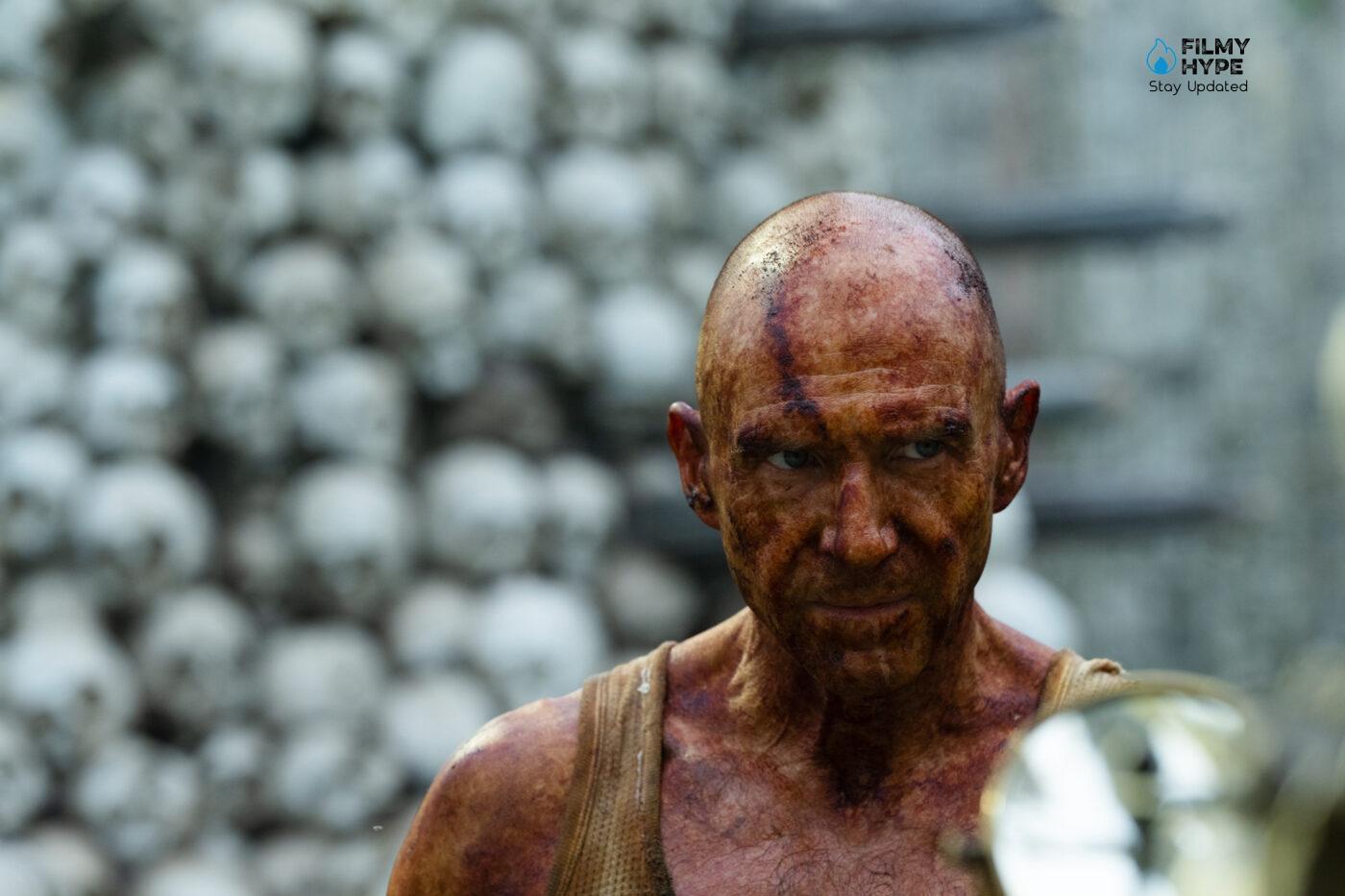
After giving him his crucifix, the father of Jimmy receives a horde of infected people who attack him without mercy, while the little one runs away. Soon after, we learn that he survived because during the first hunt for Spike, the young man and his father find an infected corpse hanging upside down with the signature of Jimmy etched in blood. There are also a few more messages on other short planes of the tape. All this confirms that Jimmy, in these 28 years he has become a kind of leader of a sect or cult. This man helps with his henchmen to Spike. With martial arts film-worthy maneuvers, they savagely take care of the infected while laughing. And with the alliance between Jimmy and the boy, 28 Years Later, it comes to an end, with no further explanation or context than pure survival. An outcome that anticipates what is to come in the next installment, The Temple of the Bones.
Who Is Jimmy and Why Does He Only Appear In Two Moments In 28 Years Later?
Jimmy is a figure who is present many times in the film, but he only really appears at the beginning and the end. Sir Jimmy Crystal, interpreted by Jack O’Connell, is the leader of a cult. As a child, he experienced the first wave of infection and managed to survive almost by a miracle (after seeing how the infected brutally attacked children and adults, and having to do many things to stay alive). Jimmy is currently the leader of a group of survivors who live on dry land and who follow him as a kind of prophet. Jimmy appears little in the movie, but this is because they didn’t want his story to be a distraction from the story of Spike and his family, and because he is a character who will have a much bigger role in the next movie. What we see here is just an introduction.
Who Dies in 28 Years Later?
Throughout the 3 films, we have seen the death of many people, but here are two that are especially important (and one of them echoes the story of the father and daughter who travel together in the first film). The most important and dramatic deaths in this film are those of Erik, a young Swedish soldier who helps Spike and Island survive, and that of the same Island, Spike’s mother. Erik dies at the hands of an infected Alpha, whom they call Samson. For her part, Isla was ill and nobody knew what was really happening to her, but when Spike takes her to Dr. Kelson, it is revealed that she has cancer and that there is not much to do to save her. Isla does not want her son to see her suffer, so she asks for the doctor’s help to die with dignity and in her own way.
What Changed With the Infected?
The main change in the infected is that, due to the evolution of the virus, there are now two new types, the Alphas, which are bigger, stronger, smarter, and harder to kill, and Slow Low They are slow and move very close to the ground, but they are still dangerous. In addition to alphas, the film also features an interesting new concept: the fact that an infected woman may have a child who is not born infected (such as the baby that Island and Spike save on dry land). It is unclear why this happens, but it may be an indicator that the virus is no longer transmitted in the same way as before.
What is the Purpose of Bone Towers?
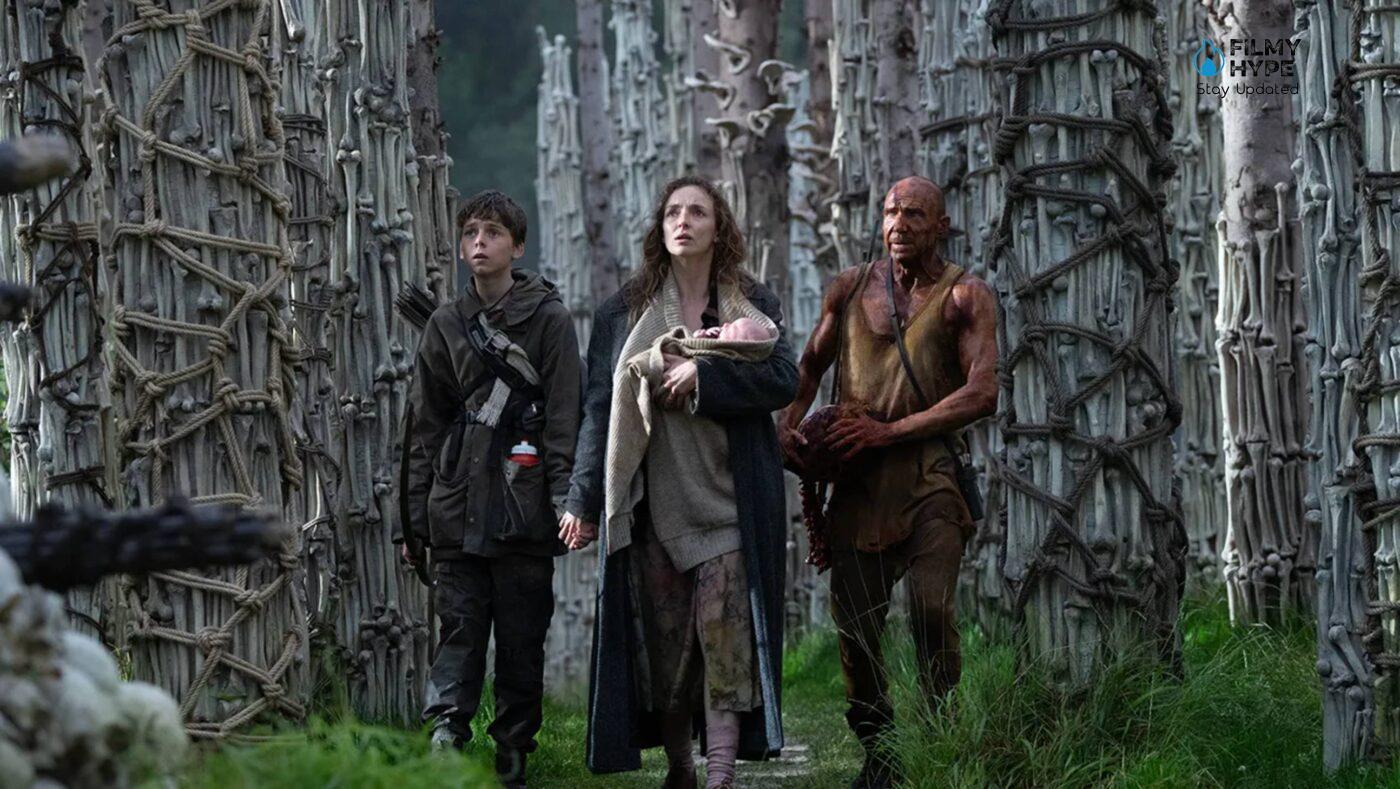
Dr. Kelson is a strange character, and there are many rumors about him, but he is a doctor who does his best to help those who ask for his help, and he builds the bone temples. But these temples are not part of a ritual or some cult, but have the bones of people who died. Kelson continues to build them as a tribute to those who have lost their lives. They are something like the altars of the dead, which serve as a reminder of people who are no longer there.
What Role Does Dr. Kelson and His Temple of Bones Play?
Kelson, who initially appears to be a sinister character, turns out to be one of the film’s most humane figures. His work of building temples with the remains of the fallen is not morbid, but a way of remembering that death also deserves respect. For Spike, Kelson represents an emotional guide: he teaches him not to suppress pain, but to find in it a reason to keep going. This learning marks the evolution of Spike, who goes from being an impulsive young man to becoming someone capable of making difficult decisions and accepting the reality of loss.
The Immune Girl: A Hope for Humanity?
The film’s biggest revelation is that an infected woman was able to give birth to an uninfected girl. According to Kelson, this is possible because the placenta acts as a barrier against the virus. This finding, while not solving the problem, opens up the possibility of a future generation immune to Rage. Spike leaves the girl in the hands of her community to grow up protected, but she knows that her destiny is linked to the continent and to the struggle that continues there.
The Road to Kelson: New Hope and Disturbing Revelations!
Spike and Isla’s journey is a path of loss and discovery. Despite Isla’s mental weakness, mother and son face Alpha, looters, and one of the most surreal scenes in the film: Isla witnesses the birth of an infected woman who gives birth to a healthy baby girl. This phenomenon, explained by Kelson, suggests that some mutations or conditions of the female body may block the transmission of the rabies virus into the uterus, opening a glimmer of hope for future natural immunity.
What About Spike?
After surviving the Alpha attack and discovering the world outside his island, the death of his mother and having rescued the baby that is born of an infected woman, Spike she manages to go home, but only to leave the baby there and make sure someone takes care of her, and then returns to dry land. It is on this new journey that Spike meets Jimmy, who saves his life with the help of his followers (all dressed and groomed in much the same way as him), who prevent a horde of infected from killing Spike. This leaves Spike and Jimmy at a key point to start the next movie. (The Bone Temple), where, through Spike, we could see much more of Jimmy’s mysterious cult, why all his followers dress the same, and what they have done to stay alive.
Spike: From Childhood to the Choice to Become a Man!
After Isla’s death, Spike finds himself confronted with a void that no survivor, no community, and no precept can fill. He is not just an orphan: he is a boy who has had to face the most brutal truth in a world already devastated by violence. For years, the rabies virus and the Alpha had been the obvious enemy, the concrete threat to fight. But now Spike knows that true destruction often arises from within: from silent illness, from the betrayal of those you love, from the remorse of not having been able to do more. Kelson’s legacy — the belief that honoring the dead is the only way not to lose humanity — becomes a new moral compass for Spike. Despite the pain, he gathers the last strength to return to Holy Island, not to return to that community that now feels foreign, but to entrust its people with the symbol of a possible future: the girl born healthy from an infected mother. It is a gesture of faith and rupture together: he hands the baby over to Jamie, leaving him a message that tells everything, then leaves him without a word of forgiveness.
That moment marks the end of Spike’s childhood: he no longer needs safe havens or rules imposed by a corrupt authority. He chooses to return to dry land, not as a fugitive but as a young man determined to trace his path. It brings with it the legacy of its mother, Kelson’s philosophy, and the awareness that survival is not only a matter of physical strength, but of moral consistency. This solitary and almost symbolic departure makes Spike not a simple survivor, but a bridge between the old world in ruins and a new possibility of redemption. His figure is destined to become central to the conflicts that await the Temple of Bones and beyond: a boy who has lost everything but who, precisely for this reason, is free to rebuild without chains.
The Meeting with Jimmy and the Unsettling Epilogue!
After leaving Holy Island behind, Spike becomes a lonely figure wandering among ruined villages, forests now the domain of the Alpha, and remains of a civilization that exists only in the memories of the older ones. It is an almost ritual journey: every encounter, every wound, every abandoned hiding place becomes a survival lesson and an identity piece. But the real turning point comes twenty-eight days after he departs from the island, when the boy, now physically tried and exhausted, finds himself face to face with what he fears most: not an isolated Alpha, but a whole pack of infected, attracted from its smell, from the noises or perhaps from the simple beat of a human heart. Spike struggles, defends himself, but the disproportion is too much. When all seems lost, salvation appears in an even more ambiguous and destabilizing form of the virus itself: a group of men and women who fight the infected with choreographic violence, in showy clothes, as warriors of an urban cult.
Their leader is Jimmy, the same child shown in the film’s prologue: a survivor of legends and whispers, who escaped as a child from the massacre of his family, raised in a world of rules invented by himself. Now Jimmy is no longer alone: he has become a living symbol, a sort of tribal king or secular messiah, surrounded by followers who worship and imitate him. They all wear bright clothes, and they wear distinctive signs such as ritual tattoos and nicknames inspired by him: the “Jimmies”. Their intervention is rapid, ruthless, and almost grotesque in contrast with the dark tone of the rest of the film. They wipe out the infected with parkour moves and craft weapons, as if they were death dancers in a distorted video game. But behind that colorful aesthetic, there is a threat: Jimmy is not a selfless savior, but a leader who gathers anyone who can be useful to him.
When Jimmy reaches out to Spike, offering him protection and a place among his own, the film closes, leaving the viewer suspended between two interpretations: Is Spike really safe, or has he only exchanged an external danger for a more subtle slavery? And is Jimmy a street hero, a tyrant, or a prophet of a new order born from the ashes of civilization? This closure, both surreal and magnetic, lays the foundations for the sequel, The Temple of Bones, and shifts the central question of the franchise: in a world freed (perhaps) from the rabies virus, who or what will be the real threat? The man himself or what he created to survive?
Jimmy and the Shadow of Jimmy Savile: An Uncomfortable Reference?
Among the interpretations most discussed by fans and critics is the one that connects Jimmy’s character to Jimmy Savile, a famous British TV presenter loved by the public and then exposed, after death, as one of the worst sexual predators in the history of the United Kingdom. It’s not just a coincidence in the name: Jimmy’s physical similarity and extravagant clothing from the film — vintage glasses, flashy jewels, sneakers with bright colors — deliberately recall the eccentric style with which Savile used to present himself in public, a mix of pop and kitsch that has become his trademark.
Many viewers read this choice as a provocation by Boyle and Garland: creating a charismatic leader who, like Savile, hides a disturbing side behind the appearance of a savior. His sect of “Jimmies” clothes like him reinforces this subtext: a humanity reduced to blind followers, ready to venerate anyone who offers protection and easy answers in a world without laws. If this parallelism is truly intentional, then Jimmy becomes not only a central character for the plot, but also a symbol of how dangerous it is to give one’s critical sense to the fascination for ambiguous figures, even after the end of a civil order. In this sense, the rabies virus remains the background, while the real infection — the manipulation of power and the veneration of evil — creeps into survivors, ready to explode right in the heart of that “Temple of Bones” which will give title to the next chapter of the saga.
The Bone Temple: A Sequel Full of Mystery!
This twist prepares 28 Years Later: The Temple of Bones, a sequel already in production under the direction of Nia DaCosta. The title takes up both Kelson’s symbolic monument and the concept of a corrupt sacred place: in the next film, the Bone Temple could become the centerpiece of a cult of survivors or an ideological conflict between those seeking redemption and those who indulge in brutality. Spike will be at the center of this struggle between humanity and bestiality, while Jim’s return (Cillian Murphy) promises a narrative arc of personal redemption for those who have seen the scourge of the rabies virus born.
After all, 28 Years Later is not just a horror of evolved infected: it is a parable on the need not to forget the dead in order not to lose yourself. From Dr. Kelson to Spike, up to Jim, the saga speaks of how memory, even the most painful, is the only weapon to remain human in a world that would prefer to reduce us to beasts. And while we wait for The Temple of Bones, we already know one thing: the real battle will not be against the virus of anger, but against what we are willing to become to survive.